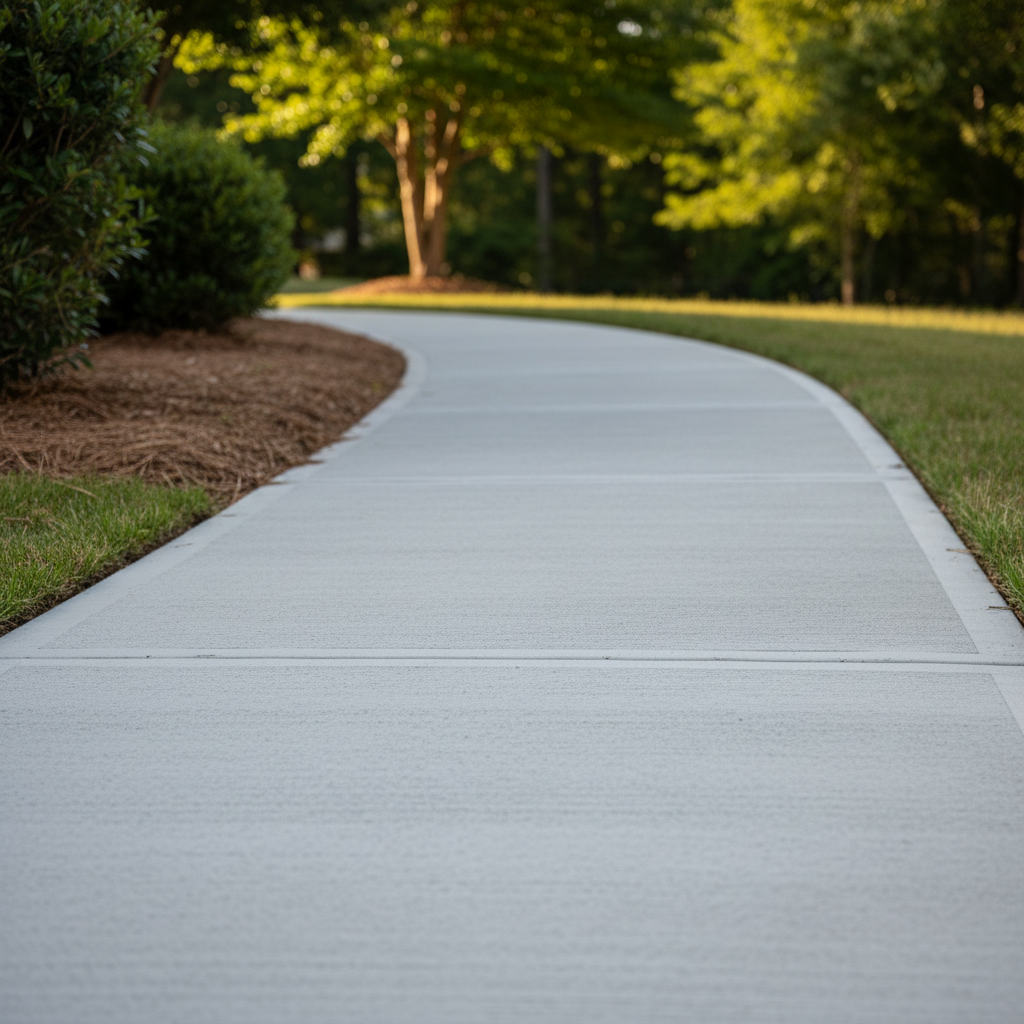
So, you're staring at your sidewalk, maybe it's got a bunch of cracks, or you're thinking about adding a new path to the backyard. Concrete sidewalks seem pretty straightforward, right? Just pour some concrete, smooth it out, and boom, you're done. Well, if you want it to actually last and look decent for years, it's actually a bit more involved than that.
I've seen a ton of sidewalks around Athens myself, from the really old districts with their cramped spaces to the newer subdivisions with their huge yards. Some are fantastic, others are a total mess, and a lot of that comes down to what happened before, during, and right after the concrete got poured.
Before You Start: Planning and Permits
First things first, don't just grab a shovel and start digging. You really need a plan. What's this sidewalk for? Is it just for folks walking lightly, or will it get heavier use, like a trash can rolling over it every single week? That makes a difference for how thick it needs to be and what kind of reinforcement you'll need.
Next, check in with the City of Athens-Clarke County Planning Department. Seriously, don't skip this step. You might actually need a permit, especially if your sidewalk connects to a public right-of-way or if you're replacing a big section. Ignoring permits can land you with fines or, even worse, having to rip out your work and start over — who needs that kind of headache? Oh, and always call 811 before you dig. Every single time. Hitting a utility line is dangerous, not to mention expensive.
And don't forget about drainage. Athens gets its share of rain, and you definitely don't want your new sidewalk funneling water straight into your house's foundation or creating a muddy swamp in your yard. A slight slope, usually about an eighth of an inch per foot, is super important to guide water away. A little foresight here saves a lot of grief later, believe me.
During the Project: DIY vs. Pro
Okay, let's talk about what you can realistically tackle yourself. If you're just patching a small crack or pouring a tiny, non-critical pad — maybe for a single AC unit or a little stepping stone path — and you're pretty handy, you might be able to pull it off. You'll need to rent or buy some tools: a wheelbarrow, shovel, rakes, a screed board, float, edger, and groover. Mixing bags of concrete isn't too bad for those small jobs, but for anything bigger, it's back-breaking work.
However, for anything beyond that, especially a full sidewalk replacement or a new path that's more than just a few feet long, you're usually better off calling in a professional. Here's why:
- Excavation and Base Prep: This isn't just digging a ditch. You need a really stable, compacted base. Here in Athens, we've got a lot of red clay, which can be tricky stuff. If you don't compact it right, or if you skimp on a good layer of gravel, your concrete will crack and settle unevenly. Pros have the right gear for this.
- Formwork: Getting your forms perfectly level and square is absolutely critical. If they're off, your sidewalk will look terrible, and it won't drain correctly either.
- Mixing and Pouring: Getting the concrete mix just right and pouring it evenly is kind of an art. Too wet, and it's weak; too dry, and it's a nightmare to work with. For anything over a few square feet, you'll need a concrete delivery truck, and you've got to be ready to work fast. Concrete waits for no one, after all.
- Finishing: This is where the real skill shows up. Screeding, floating, edging, and grooving. If you don't do it right, you'll end up with a rough, ugly surface that collects water and dirt. Expansion joints are also super important to stop cracking from temperature changes, and placing them correctly is key.
If you're not confident about any of these steps, or if the project is on the larger side, save yourself the headache and call a pro. Companies like Kingdom Concrete Athens have the experience, the tools, and the crew to get it done right the first time. We've seen way too many DIY sidewalk projects that actually cost more to fix than if a professional had just done it from the start.
After the Pour: Curing and Care
So, you've poured it, you've finished it, now what? The most important thing is proper curing. Concrete doesn't just dry; it actually cures. This is a chemical reaction that makes the concrete strong. If it dries out too fast, it won't ever reach its full strength and will be much more likely to crack.
Keep it moist for at least 3 to 7 days, longer if you can manage it. You can do this by misting it with water, covering it with plastic sheeting, or using a curing compound. Don't walk on it for at least 24 hours, and keep heavy traffic off it for at least a week, preferably even longer. Just give it some time to get good and strong.
Once it's fully cured, your concrete sidewalk will be pretty low maintenance. Sweep it regularly to keep dirt and debris off. If you get stains, clean them up quickly. For oil or grease, a degreaser and a stiff brush usually do the trick. Pressure washing is fine, but don't use super high pressure or hold the nozzle too close, or you could actually damage the surface.
And that's pretty much it. A well-built concrete sidewalk should serve you well for decades. Just remember, a little planning and knowing your limits can make all the difference between a lasting improvement and a project that just frustrates you to no end.