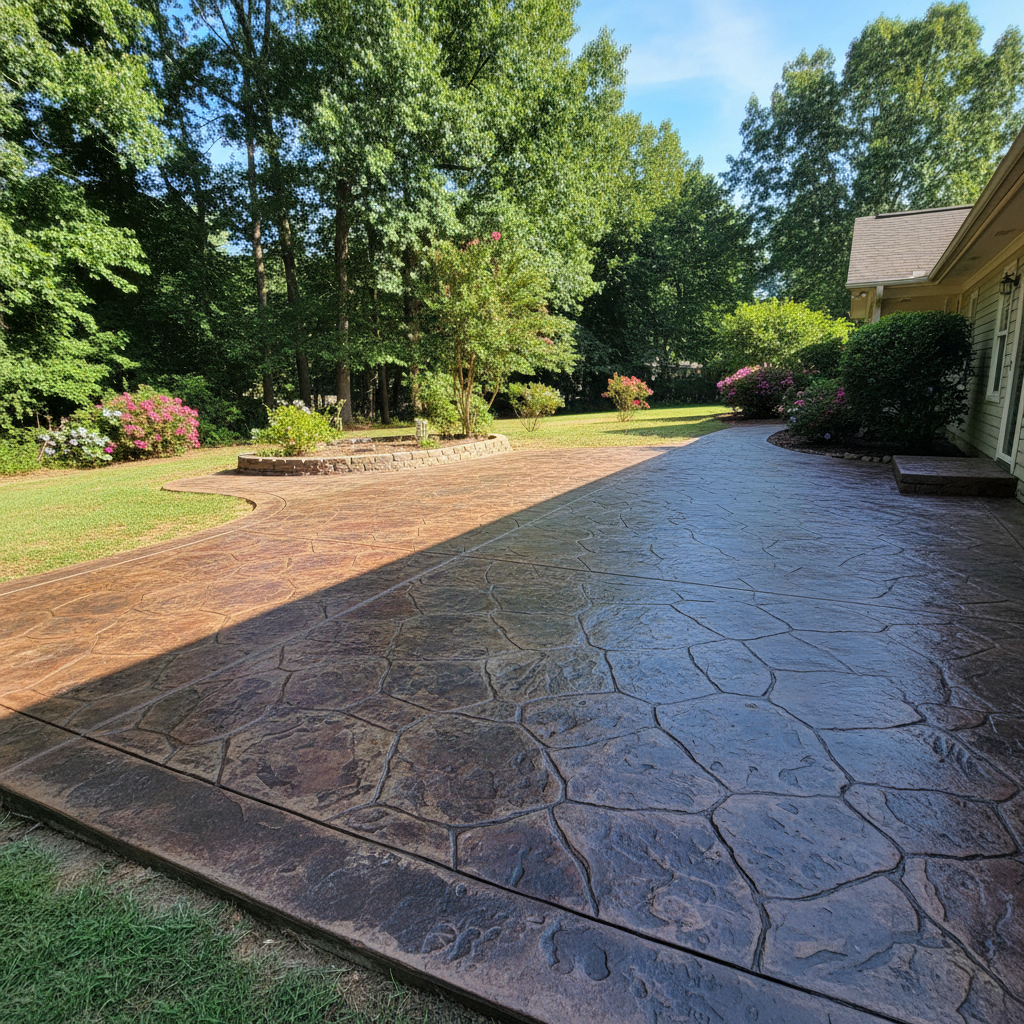
Alright, let's talk about stamped concrete for a bit. You probably picked it for some good reasons, right? It just looks fantastic, honestly, giving you that high-end stone or brick vibe without all the fuss, and it's built pretty tough. But even "tough" doesn't mean "indestructible," especially when you consider our specific climate here in Athens, GA. Our weather—those scorching summers, the humidity that feels like it never takes a break, and even those occasional, unexpected hard freezes—can really put your concrete through its paces. If you want your stamped concrete patio, driveway, or even just a walkway to keep looking sharp and actually last for decades, you've really got to give it some attention. I've seen too many people, unfortunately, neglect their investment, and trust me, it definitely shows over time. So, here's the straightforward, no-nonsense scoop on how to maintain your stamped concrete, Georgia-style.
Extend Its Life: The Sealer is Your Shield
The single most important thing you can do for your stamped concrete is to keep that sealer fresh. Think of the sealer as a kind of sunscreen and rain jacket for your concrete, if you will. Georgia's intense UV rays will fade those beautiful colors over time, which is a shame, and all that rain and humidity can lead to other issues that you'd rather avoid.
- Reseal Regularly: For stamped concrete, you're generally looking at resealing every 2-3 years. Some folks might say 3-5 years, but with our sun and humidity levels around here, I honestly lean towards the shorter end of that timeframe. If you've got a high-traffic area, like a driveway or a pool deck that gets a lot of direct sun, you might even need to do it every single year.
- Check Your Sealer: Not sure if it's time to reapply? Do a simple water test. Just pour a little water on the surface. If it beads up nicely, your sealer is still doing its job. But if it soaks in and darkens the concrete, it's definitely time to reseal. You can also look for a dull appearance; a good sealer usually gives things a slight, healthy sheen.
- Choose the Right Sealer: You'll want a good quality, UV-resistant sealer, of course. Ideally, use the same type of sealer that was put on initially. If you don't know what that was, make sure you're at least sticking with water-based over water-based, or solvent over solvent.
- Avoid De-Icing Salts: This is a key point, truly. While we don't get heavy snow all that often, those rare icy mornings might tempt you to throw down some salt. Don't do it on stamped concrete! De-icing salts can cause the surface to scale and flake, which is a headache. Sand is a much safer bet for getting traction.
Regular Maintenance: Keep it Clean
Beyond just sealing, regular cleaning is pretty easy to handle. You generally don't need any fancy equipment for most of these tasks.
- Sweep and Rinse: Just like any outdoor surface, sweep off leaves, dirt, and other debris regularly. Then, a good rinse with a garden hose and a mild detergent will handle most of the grime, pollen, and those inevitable food spills.
- Watch the Pressure Washer: A pressure washer can be helpful, but use it carefully. If the setting is too high, you can damage the sealer or even the concrete surface itself, eroding the texture. A soft-wash method is usually best for stamped concrete, generally speaking.
- Tackle Stains Promptly: Oil, grease, that infamous Georgia red clay (oh, that red clay!), and mildew can really set in if you let them sit. Clean these up as soon as you notice them. There are specific cleaners for different types of stains, but always test in an inconspicuous spot first, just to be safe.
Warning Signs of Trouble
Even with good maintenance, things can still happen, unfortunately. Knowing what to look for can save you a bigger headache, and a bigger bill, down the road.
- Fading or Discoloration: If your vibrant color starts looking dull or patchy, your sealer is likely failing, and the concrete is getting exposed to UV damage.
- Cracks: Hairline cracks are pretty normal with concrete, even stamped. But if you see cracks widening, or new, significant cracks appearing, that's definitely a red flag. Our clay soil here in Athens expands and contracts, which can put stress on concrete and cause movement.
- Spalling or Flaking: This is when the surface layer starts to chip or peel away. It can be caused by freeze-thaw cycles, improper sealing, or even using de-icing salts.
- Uneven or Sinking Areas: If parts of your stamped concrete are sinking or becoming uneven, it could point to issues with the sub-base or soil erosion underneath.
- Efflorescence: See a white, powdery residue on the surface? That's efflorescence. It's salts leaching out of the concrete, usually carried by moisture. It's not usually structural, but it's unsightly and indicates moisture movement.
When to Call a Professional
Look, I'm all for homeowners taking care of their property, truly, but some things are just best left to the pros. You can definitely handle the cleaning and even some resealing yourself if you're handy. But if you see any of these issues, it's time to pick up the phone:
- Significant Cracking: If cracks are getting wider than a credit card, or if you see a spiderweb pattern, you've got a problem that needs assessment. We can often repair cracks before they become a full-blown replacement job, which is always good.
- Extensive Spalling or Flaking: If large areas are flaking, it's not just a cosmetic issue anymore. This needs professional repair to restore durability and appearance.
- Uneven or Sinking Slabs: This almost always indicates a sub-base issue that requires specialized equipment and expertise to fix correctly. Trying to fix this yourself, honestly, can make it worse.
- Stubborn Stains or Efflorescence: If you've tried cleaning and the stains or white powder just won't budge, we've got stronger stuff and techniques that won't damage your concrete.
- Color Restoration: If your stamped concrete has really lost its color and vibrancy, a professional can often bring it back with re-coloring or specialized sealing.
- You're Unsure: Honestly, if you're not sure what's going on or how to fix it, just call. It's better to get an expert opinion early than let a small problem turn into a major, costly repair.
Maintaining your stamped concrete isn't rocket science, but it does take consistency and knowing when to get help. A little proactive care goes a long way in protecting your investment and keeping your Athens home looking great, which is what we all want. If you've got questions or see something that worries you, don't hesitate to reach out to Kingdom Concrete Athens. We're always happy to take a look and give you an honest assessment.