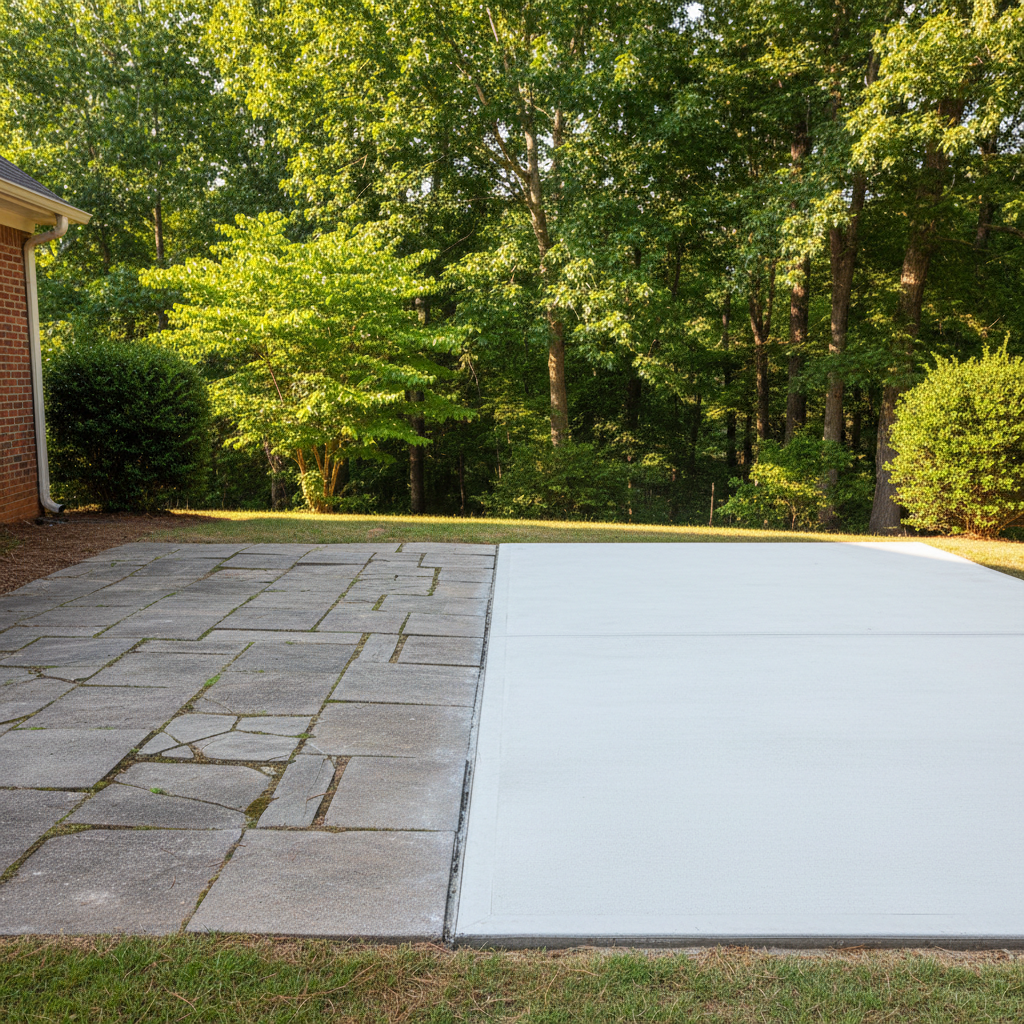
Alright, you're dreaming of a new patio out back, maybe a spot to grill, kick back, or just watch the kids play. That's fantastic. But then comes the big question, doesn't it? What kind of concrete surface should you actually go with? Most folks in Athens usually narrow it down to two main options: a traditional poured concrete slab or individual concrete pavers. Both can look amazing, but they're definitely not the same. What works for your neighbor in Normaltown might not be the right fit for your place out by Lake Herrick, you know?
Poured Concrete Slab: The Classic Choice
When I say 'poured concrete patio,' you're probably picturing a smooth, solid surface. And that's exactly what it is. We come in, prep the ground, build a form, pour the concrete, and then finish it off. It's a tried-and-true method for a reason, after all.
Cost
Generally speaking, a standard poured concrete slab is often your most budget-friendly option upfront. You're mostly paying for the materials and the labor to pour everything at once. There's less individual material handling compared to pavers, which can help keep that initial price tag down. Now, if you start adding fancy stamped patterns or intricate staining, that cost can definitely climb – sometimes even surpassing pavers, actually.
Durability & Maintenance
A well-poured concrete slab is seriously tough. It can handle a lot of wear and tear. The biggest thing you'll need to watch out for here in Athens, especially with our clay soils, is cracking. Expansive clay can shift, and if the ground isn't prepped just right, or if you don't have proper control joints, you'll see cracks. Once a crack forms, it's there for good. You can repair it, sure, but it's rarely invisible. Maintenance is pretty low: sweep it, hose it off, maybe power wash it once a year. You'll want to seal it every few years to protect it from stains and the elements, too.
Appearance
A basic poured slab gives you a clean, minimalist look. It's really versatile. You can get it broom-finished for a little texture, or go for a smooth trowel finish. As I mentioned, we can also stamp it to mimic stone or brick, or stain it for color. The downside, though, is that it's one continuous surface, so any imperfections or cracks really stand out.
Concrete Pavers: The Flexible Alternative
Pavers are individual concrete units, kind of like big, heavy tiles, that fit together to create a surface. They come in all sorts of shapes, sizes, colors, and textures. Think of them as a puzzle that makes up your patio.
Cost
Typically, pavers will have a higher upfront cost than a basic poured slab. The materials themselves are often more expensive per square foot, and the labor involved in laying each individual paver, making sure it's level and properly interlocked, just takes more time and skill. However, if you were planning on a decorative stamped concrete slab, pavers might actually end up being comparable or even cheaper, depending on which paver you pick.
Durability & Maintenance
This is where pavers really shine, especially in a place like Athens with our crazy weather and shifting ground. Because they're individual units, they have flexibility. If the ground shifts a bit, or a tree root starts to push up, pavers can move right along with it. If one paver gets damaged – say, you drop something heavy on it – you can usually just pop that one out and replace it. No big deal. You don't get those big, ugly, unfixable cracks you see in slabs. Maintenance involves sweeping, hosing, and occasionally topping up the joint sand. Weeds can sometimes sprout between pavers, but a good polymeric sand application helps prevent that, thankfully.
Appearance
Pavers offer a huge range of design possibilities. You can mix colors, create patterns, and get textures that look like natural stone, brick, or even wood. This gives you a lot of creative freedom to match your home's style. The segmented look is also a big draw for many homeowners, giving a more intricate and often higher-end aesthetic.
So, Which One Should You Pick?
Look, both are solid choices for a patio, and Kingdom Concrete Athens installs both regularly. But if I had to give a general recommendation for most Athens homeowners, especially considering our climate and soil conditions, I'd lean towards **concrete pavers**.
Here's why:
- Flexibility with our clay soil: Our red clay can be a real pain. It expands when wet, shrinks when dry. This movement is a primary cause of slab cracking. Pavers handle this movement much better.
- Easier repairs: If something goes wrong, replacing a single paver is a lot less disruptive and less noticeable than patching a crack in a slab.
- Aesthetics: The design options are just so much broader with pavers, allowing for a truly custom look that can really boost your home's curb appeal.
Now, if you're on a super tight budget and just need a basic, functional surface, a simple poured slab is still a great, cost-effective choice. And if you love the look of stamped concrete, we can definitely make that happen too. Just know what you're getting into regarding potential cracking down the road, okay?
Ultimately, it comes down to your priorities: budget, long-term maintenance, and the look you're going for. Give us a call at Kingdom Concrete Athens, and we can chat through your specific project. We'll help you figure out the best approach for your backyard and your budget.